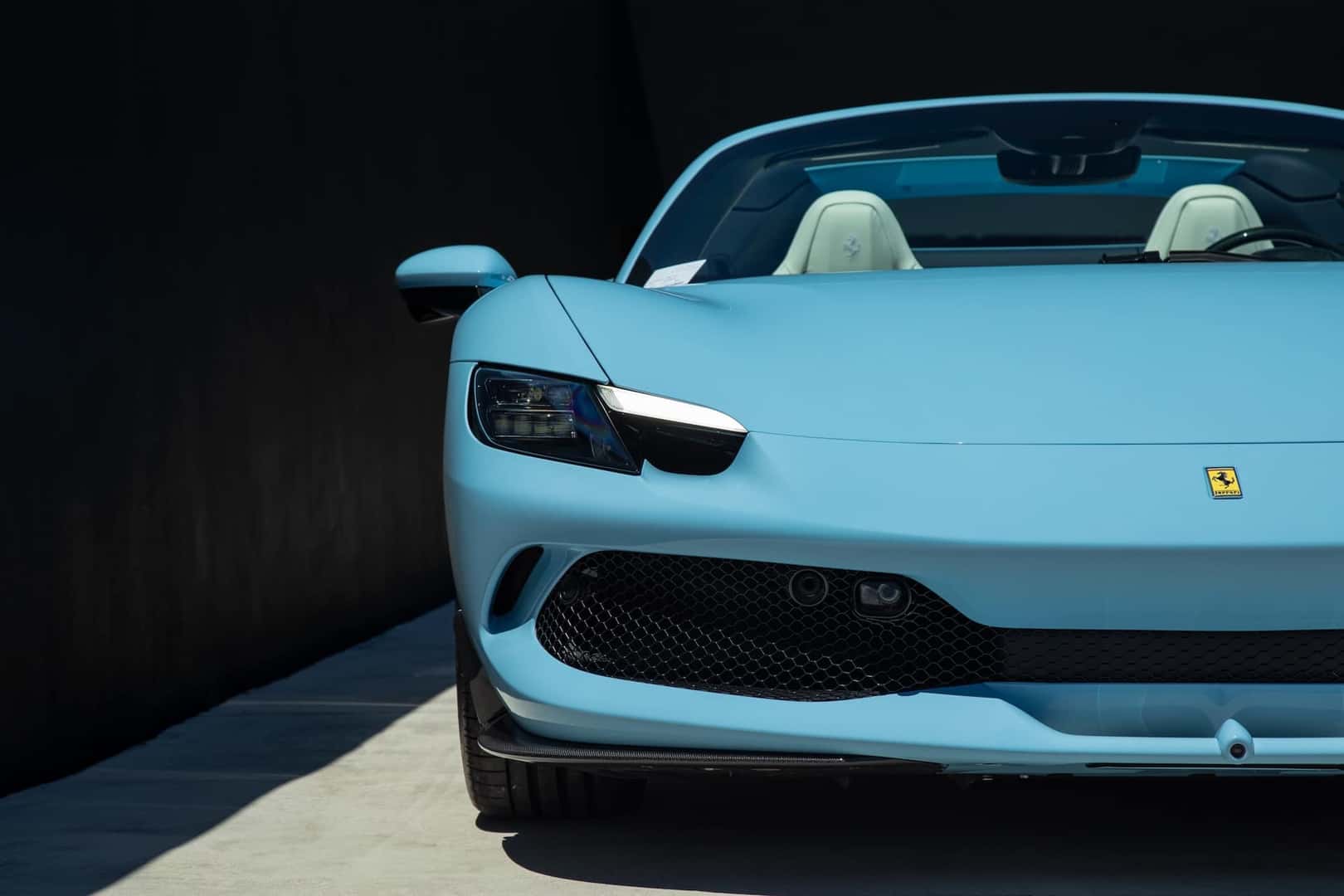
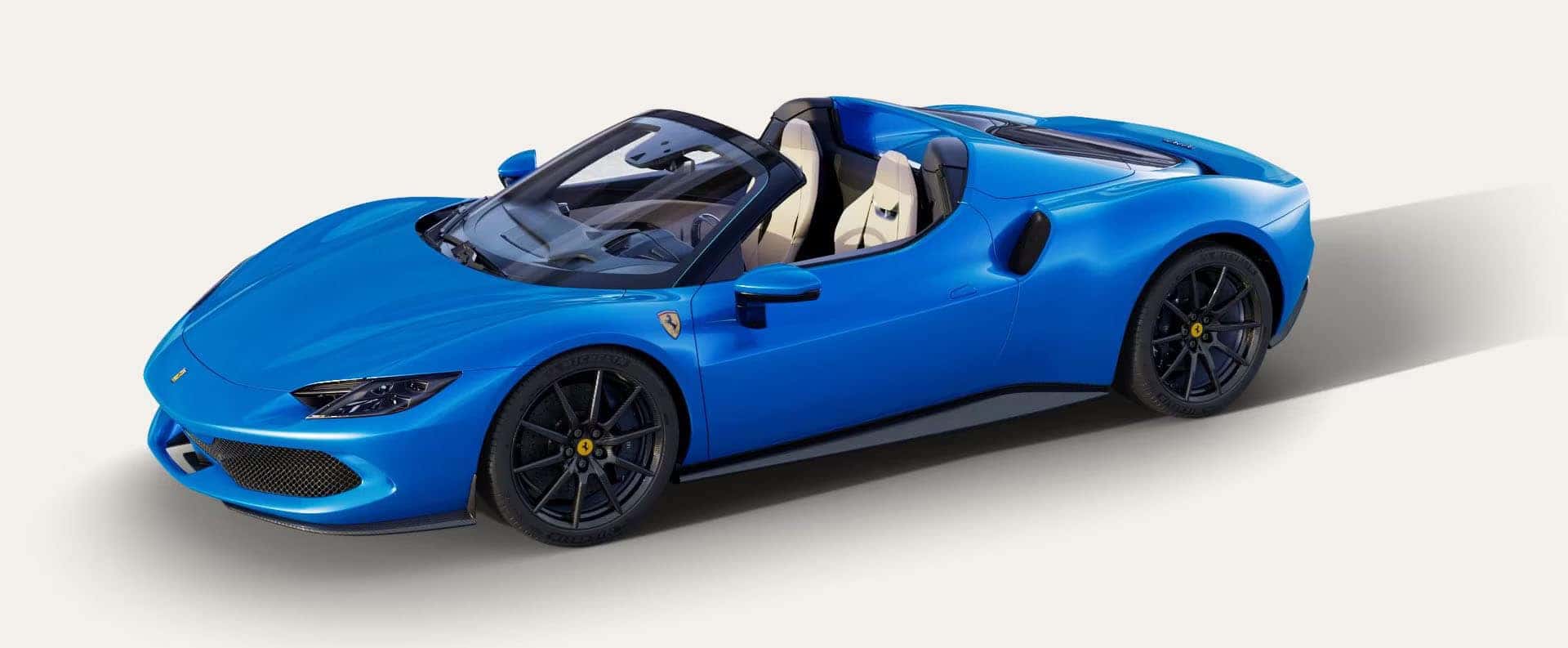
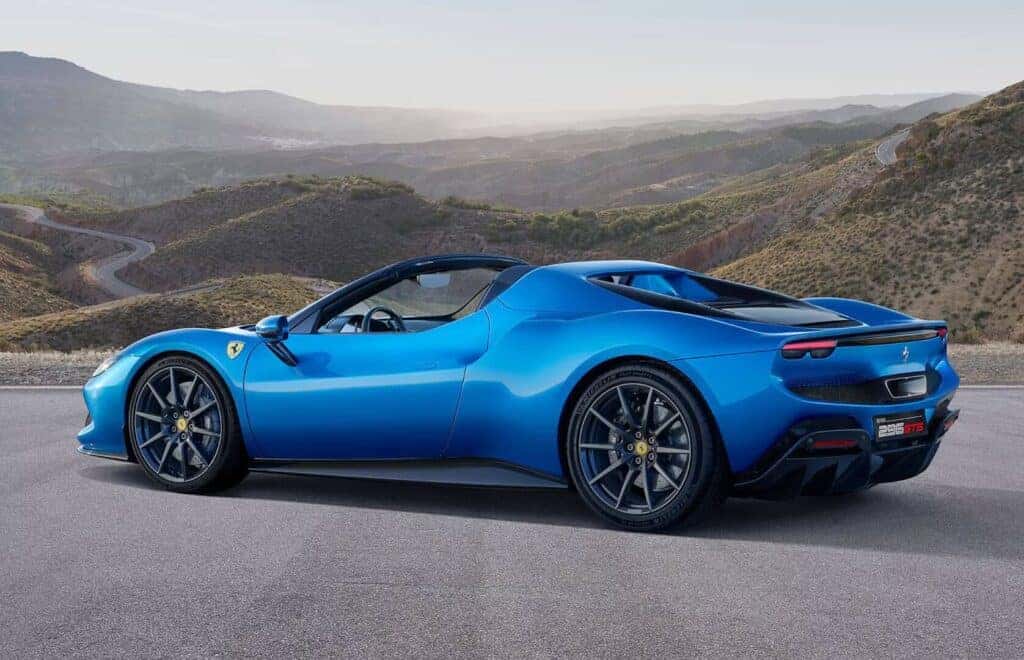
The Ferrari 296 GTS, the evolution of Ferrari’s mid-rear-engined two-seater berlinetta spider concept, is powered by the new 120° V6 engine coupled with a plug-in (PHEV) electric motor that debuted on the 296 GTB, which unleashes a massive 830 cv in total. The car thus redefines the whole concept of fun behind the wheel, guaranteeing pure emotions not just when it is being pushed to its limits, but also in day-to-day driving situations.
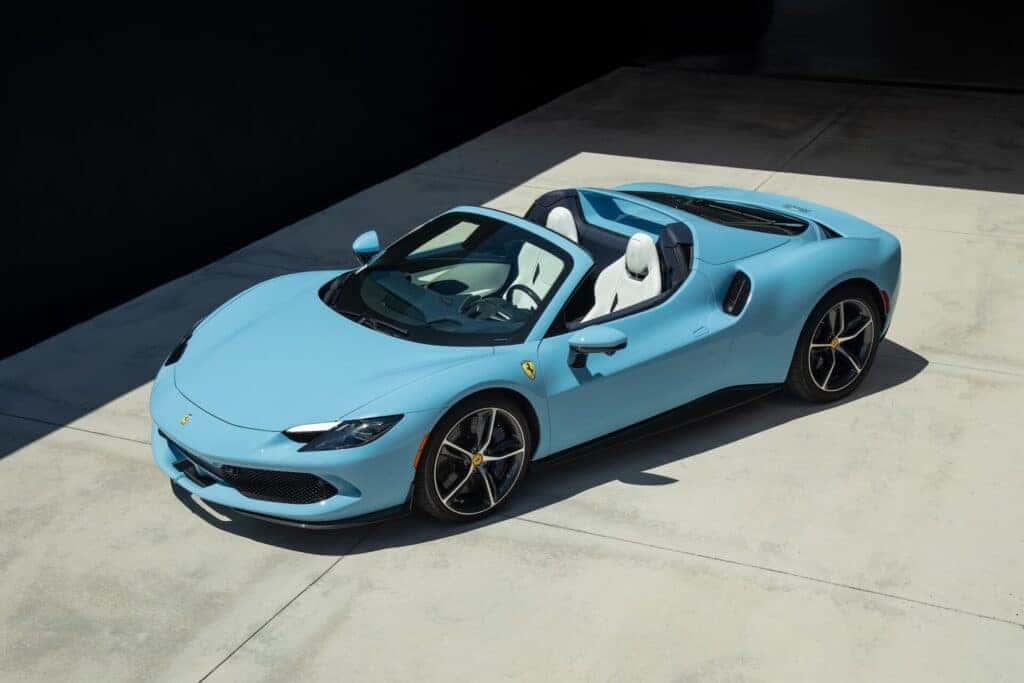
The changes made for the Ferrari 296 GTS further emphasize the clean, sophisticated lines of the 296 GTB. When the top is down, it is the peerlessly elegant epitome of the open-air hybrid concept. Its unprecedented architecture for a spider, in fact, opens a whole new chapter in the marque’s story.
The designers’ goal of retaining the 296 GTB’s main characteristics required a period of meticulous analysis of the dimensions of its technical components. There was a clear focus on minimizing the impact of any modifications on the exterior bodywork and also on introducing a clear, instantly recognisable theme that would encapsulate the complexity of the design whilst translating it into accomplished linear forms
The design of the 296 GTS redefines Ferrari’s mid-rear-engined spider, carrying the GTB’s compact, modern lines into an open-air format without compromise. Its short wheelbase and monolithic proportions make it the most compact spider from Maranello in over a decade.
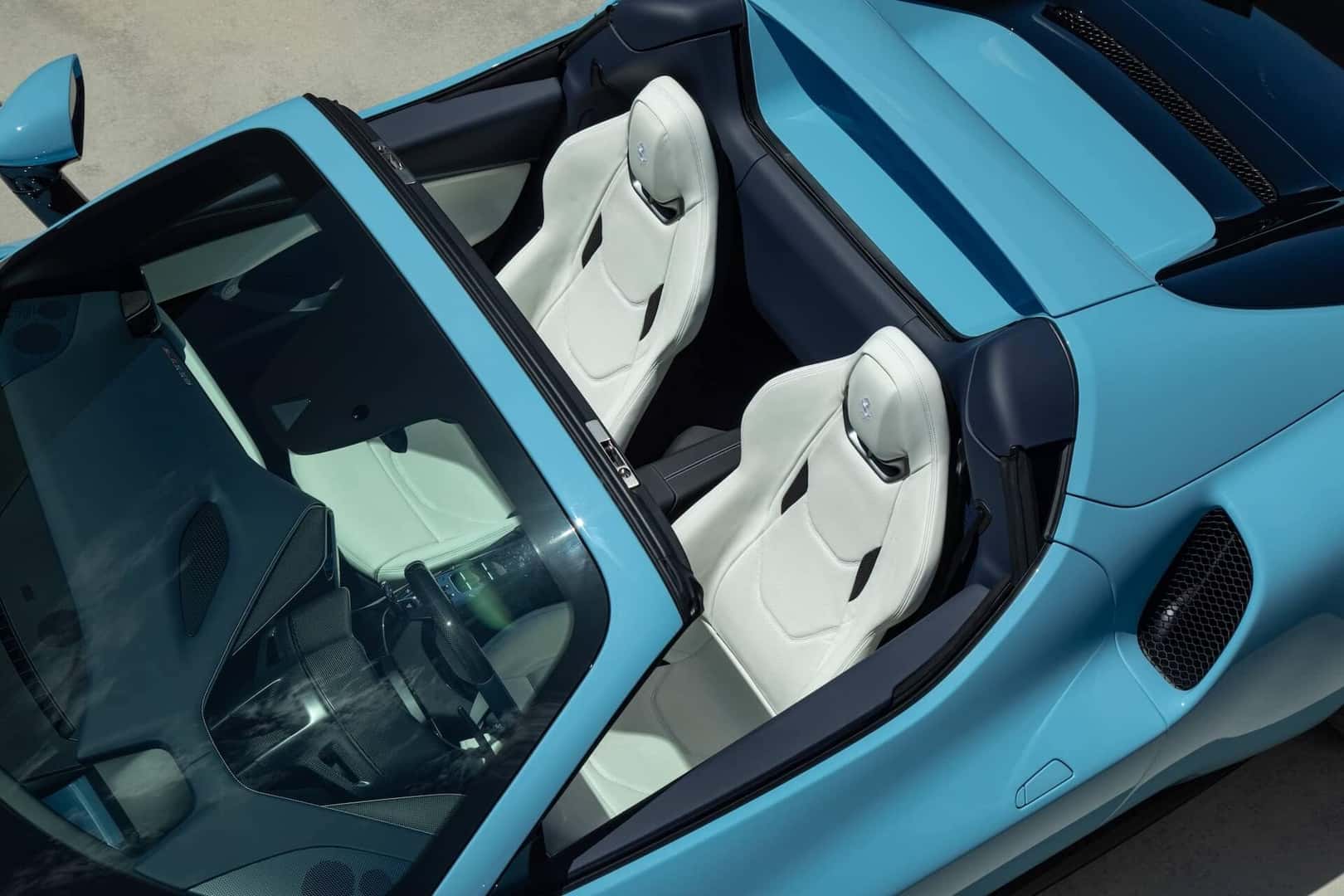
Rather than simply removing a roof, the Ferrari Style Centre reimagined the cabin — retaining the muscular mudguards and powerful volume of the GTB while introducing a retractable hardtop that folds cleanly away. A specially shaped tonneau cover acts as a virtual fairing, preserving the aerodynamic profile of the coupé even with the top stowed. The result is a spider that looks just as resolved open as it does closed.
The 296 GTS introduces radical solutions to the mid-engined spider segment. Its hot-V turbo configuration — mounted above the crankcase vee — enables more efficient thermal management for both the engine bay and electrical components. The aero philosophy is equally bold: rather than managing drag, the 296 GTS uses active aero to generate extra downforce, flipping Ferrari’s recent paradigm on its head.
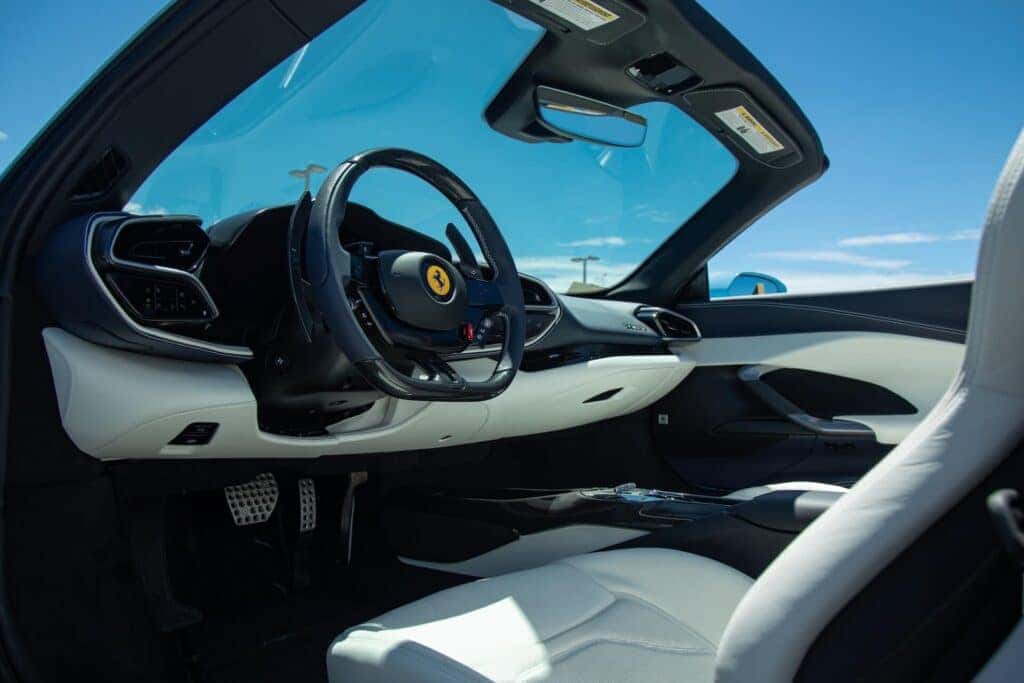
The 296 GTS wraps its cockpit entirely around the driver — a compact, minimalist layout with a fully digital instrument cluster and Ferrari’s latest HMI interface for intuitive, eyes-on-road control. Premium materials and clean surfaces keep distractions to a minimum, so nothing competes with the driving experience — or, with the top stowed, the open-air theater of a 830 cv V6 at full voice.
830 cv from a twin-turbo V6 hybrid — Ferrari’s first plug-in spider, pairing turbocharged power with instant electric torque through an 8-speed dual-clutch. A powertrain that thrills when pushed, refines itself when cruising, and with the top down, lets you hear every bit of it.
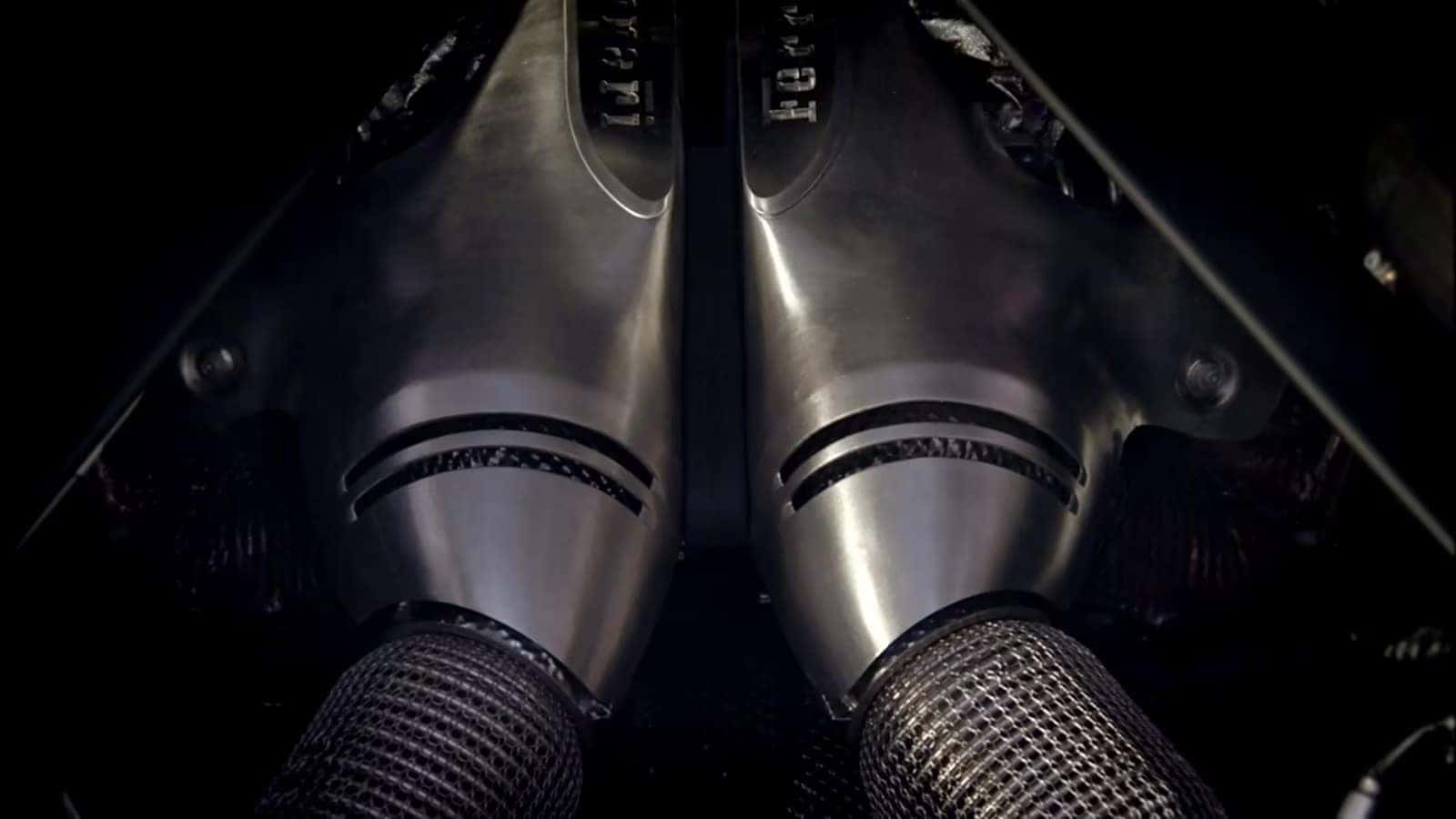
Every element of the intake and exhaust architecture has been meticulously crafted to deliver a sound worthy of Maranello — proving that a V6 can stir the soul just as deeply at every revolution.
The electric motor doesn’t just fill the turbo lag — it reshapes how all 830 cv reach the road. Instant torque smooths power delivery at corner exit, feeding the rear axle progressively instead of all at once. More traction, more confidence, and a powertrain that works with you — top up or down.
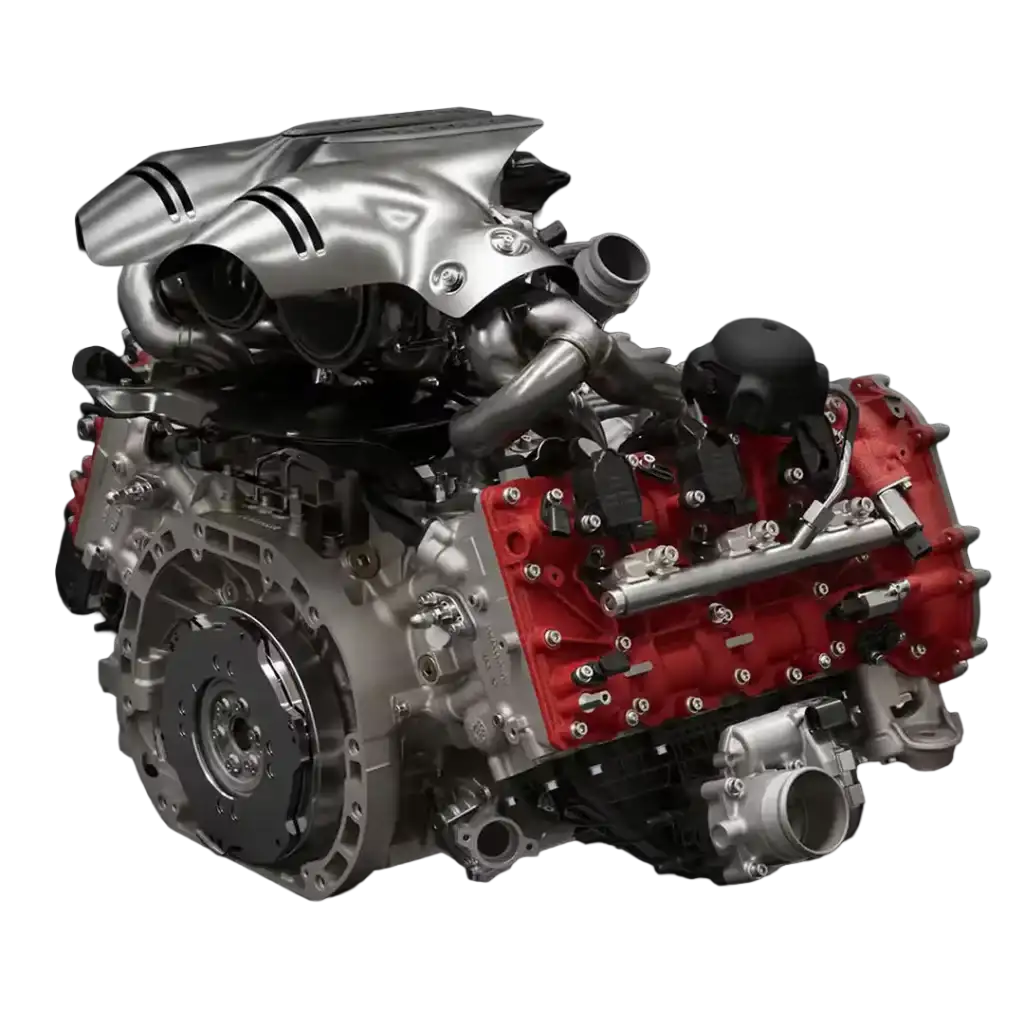
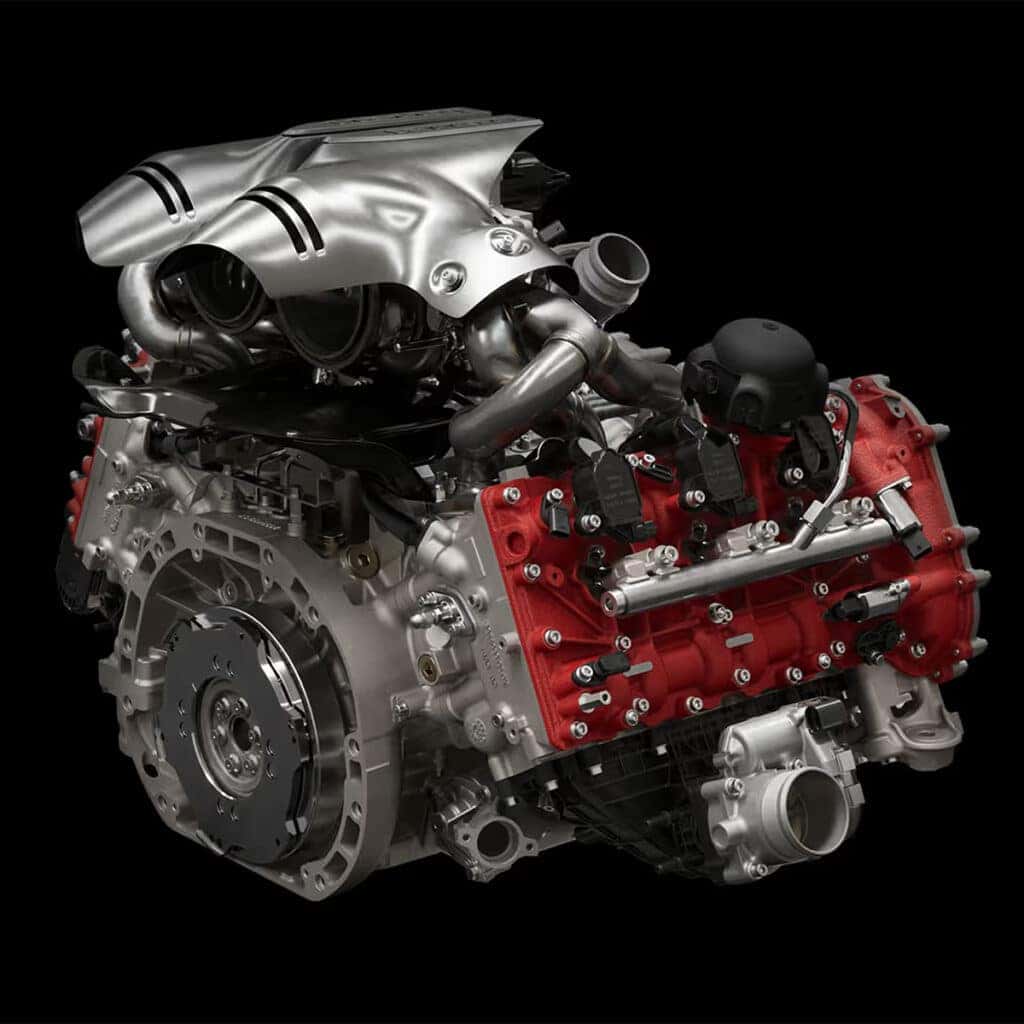
The heart of the 296 GTS — a 2.9-liter twin-turbo V6 paired with an electric motor, delivering a combined 830 cv and a soundtrack that redefines what a six-cylinder Ferrari can be. Drop the top and it doesn’t just redefine it — it proves it.
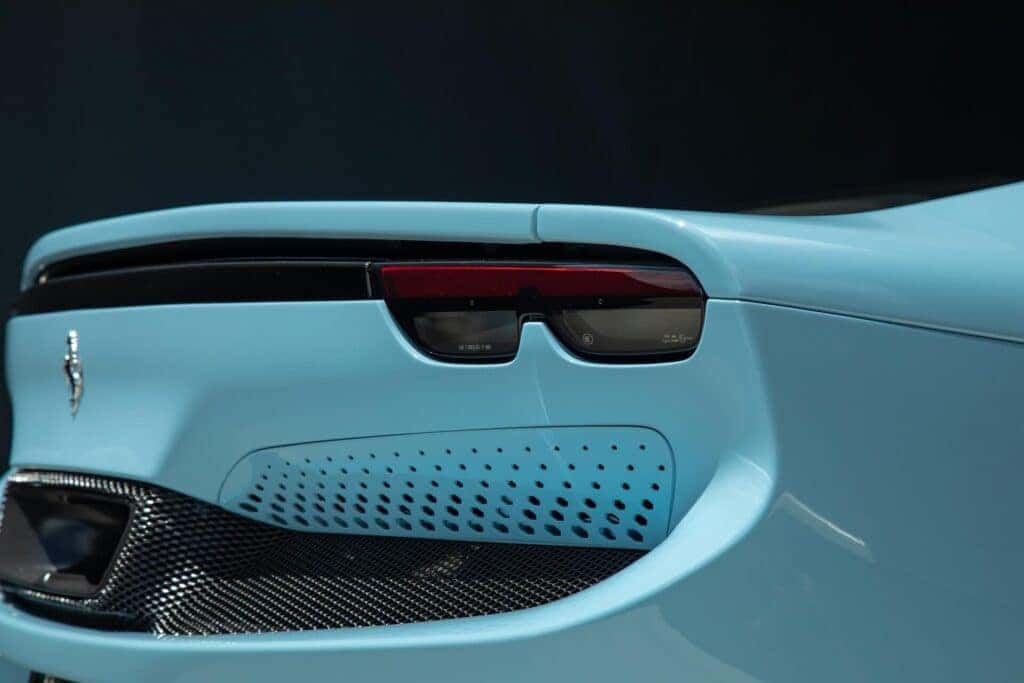
An active rear spoiler deploys automatically when acceleration hits a set threshold, adding 100 kg of downforce over the rear axle — then tucks flush into the tail to preserve the GTS’s clean lines.
Advanced dynamic controls, powered by the latest Side Slip Control system, translate hybrid power into precise, natural movement.
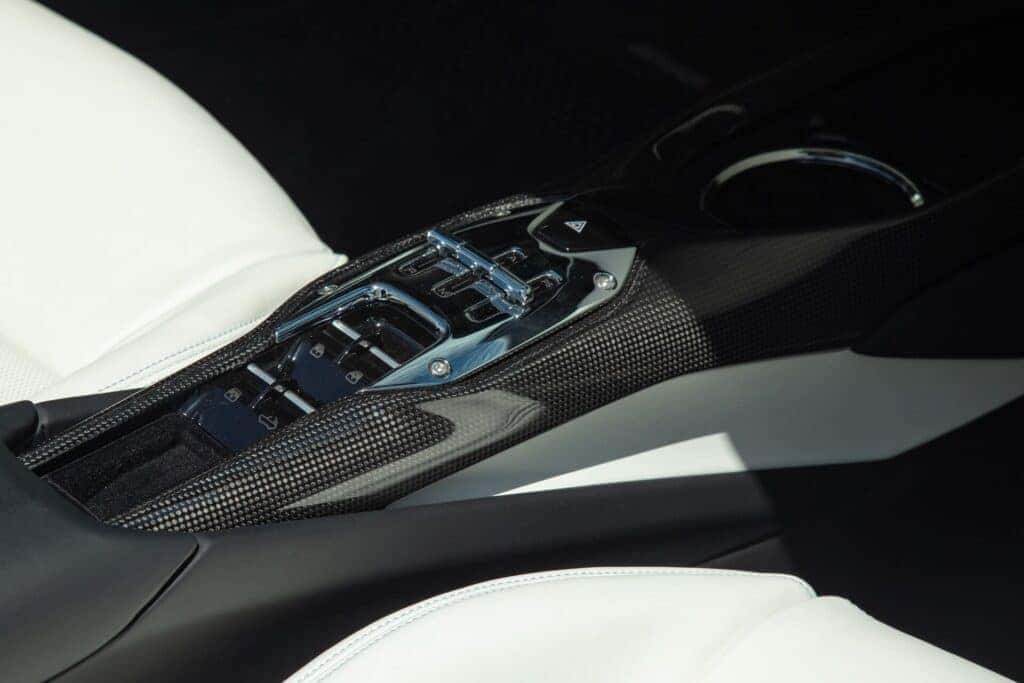
The 296 GTS’s cabin is built around the full-digital interface introduced on the SF90 Stradale. However, where the SF90 Stradale emphasized advanced technology and a break with the past, the 296 GTS integrates its technical content into a more refined and elegant environment. The result is a cabin that feels pure, sophisticated and seamlessly connected to the exterior design, while the open-top configuration adds a uniquely immersive dimension to the driving experience.
Most of the instruments are concentrated on the driver’s side. The cockpit is created from a break in the upholstery of the dashboard from which the steering wheel and instrument panel emerge, centrally supported by two visible buttresses that converge in the dashboard. The figure is closed by two lateral surrounds that cover a large area. The passenger area has a minimalist look; the display offers the chance to participate in the journey, almost as a co-driver.
The 296 GTS carries forward Ferrari’s racing heritage through its mid-rear-engine V6 architecture and advanced hybrid powertrain. The lineage of Ferrari’s mid-rear V6 cars stretches back to the 246 SP, which became the first Ferrari with a mid-rear V6 and won the Targa Florio in 1961 and 1962. In 1962, Ferrari’s 120° V6-powered 156 F1 also secured the marque’s first Formula 1 Constructors’ title.
Ferrari later pioneered mid-mounted turbocharging with the 126 CK and 126 C2, with the latter becoming the first turbocharged car to win the Formula 1 World Championship in 1982. The 296 GTS builds on this competition-bred expertise with its 3.0-liter twin-turbo 120° V6 paired with a plug-in hybrid system, bringing Ferrari’s racing-derived technology into an open-top road car.
The 296 GTS features an innovative 120° V6 configuration with centrally mounted twin turbos positioned inside the “V.” The wider bank angle allows for a more compact engine layout, reducing overall dimensions while shortening the air path to the combustion chambers for improved efficiency and responsiveness.
This engineering also creates a distinctive soundtrack, blending the force of twin-turbocharging with the high-frequency character of Ferrari’s V12 heritage. Even at low revs, the cabin is filled with rich harmonic orders that build into a signature treble as the revs climb, adding an unmistakable dimension to the open-air experience of the 296 GTS.
The 296 GTS brings bold aerodynamic solutions to the open-top sports car segment. Its design prioritizes generating downforce through active aerodynamic devices, with the rear spoiler increasing downforce when deployed rather than simply reducing drag. This approach, combined with the GTS’s specially shaped tonneau cover and carefully sculpted bodywork, optimizes airflow and allows the car to deliver the aerodynamic performance of a coupé while maintaining the distinctive character of an open-top Ferrari.
The 296 GTS’s impressive performance was achieved by optimising the car’s volumes. The result is a car in which all the performance-oriented elements meld effortlessly with the styling, underscoring Ferrari’s inextricable marriage of technology and aesthetics. The aero development done on the 296 GTS means that in LD (low drag) configuration, it delivers 10% more downforce than previous applications. In HD (high downforce) configuration, there is an additional 100 kg in downforce thanks to the active spoiler. The result? Unprecedented handling, braking performance and driving pleasure
The specific conformation of the 296 GTS’s tonneau cover creates a virtual fairing that mimics the aerodynamic behaviour of a coupé. This means that the air above the aero profile is correctly deflected so that the car’s aerodynamics and cooling are as efficient as possible. Thanks to this optimisation work, the 296 GTS’s active spoiler delivers the same downforce as the 296 GTB
The main aerodynamic feature of the rear of the 296 GTS is the active spoiler. However, the concept behind it is actually the exact opposite of the one adopted on previous models. In the past, flaps on the diffuser allowed a transition from a high-downforce (HD) configuration to a low-drag (LD) one that allowed maximum speed to be reached on the straight. However, on the 296 GTS, when the active aero device is deployed it increases downforce. The spoiler is integrated into the tail design and when maximum downforce is not required, it is stowed in a compartment in the upper section. But as soon as acceleration figures exceed a specific threshold, it deploys. This results is a 100 kg increase in downforce over the rear axle, improving the driver’s control in high-performance driving situations and minimising stopping distances under braking
The 296 GTS’s dynamic development focussed around boosting the car’s pure performance, delivering class-leading levels of driver engagement as well as improving the usability and accessibility not just of the car’s speed, but also the hybrid layout.
Specific components have been developed, not least the Transition Manager Actuator (TMA) and the 6-way Chassis Dynamic Sensor (6w-CDS). There are also new functions, such as the ABS EVO controller, which uses the data gathered by the 6w-CDS, and the grip estimation integrated with the EPS, seen on the 296 GTB
How easily accessible and usable the performance is also of significant importance in the 296 GTS: for instance, in electric-only eDrive mode, the car can reach speeds of up to 135 km/h without resorting to the ICE.
In Hybrid mode, on the other hand, the ICE backs up the electric motor when higher performance is required. Stopping distances in the dry have been significantly shortened by the ABS EVO and its integration with the 6w-CDS sensor, which also ensures more consistent braking force under repeated heavy braking
The 296 GTB’s chassis was redesigned and optimised for the 296 GTS to improve torsional rigidity and beam stiffness compared to previous spider applications. This was achieved to the tune of 50% in the case of the former and 8% in the case of the latter. The main areas involved were the A-pillar, B-pillar and sills.
| Performance | |
|---|---|
| Top Speed | Over 205 mph |
| 0–100 km/h | 2.9 sec |
| 0–200 km/h | 7.6 sec |
| 200–0 km/h | 107 m |
| Powertrain | |
|---|---|
| Engine | 3.0L Twin-Turbo V6 – 120° – Dry Sump |
| Displacement | 182.6 cu in (2,992 cc) |
| Maximum Engine Power | 663 cv @ 8,000 rpm |
| Maximum Hybrid System Power | 830 cv @ 8,000 rpm |
| Maximum Torque | 740 Nm @ 6,250 rpm |
| Maximum Engine Speed | 8,500 rpm |
| Compression Ratio | 9.4:1 |
| Lubrication System | Dry Sump |
| High-Voltage Battery Capacity | 7.45 kWh |
| Transmission | 8-Speed F1 DCT |
| Transmission & Electronic Controls | |
|---|---|
| Transmission | 8-Speed F1 Dual-Clutch Transmission |
| Differential | Electronic Differential (E-Diff) |
| Side Slip Control | eSSC |
| ABS | ABS Evo |
| Steering | Electric Power Steering |
| Manettino | 5-Position Manettino Switch |
| Weights & Dimensions | |
|---|---|
| Length | 179.7 in |
| Width | 77.1 in |
| Height | 46.9 in |
| Wheelbase | 102.4 in |
| Dry Weight | 3,395 lbs |
| Weight Distribution | 40.5% Front / 59.5% Rear |
| Fuel Tank Capacity | 17.2 gal |
| Rear Bench Capacity | 49 L |
| Tires & Brakes | |
|---|---|
| Front Tires | 245/35 ZR20 |
| Rear Tires | 305/35 ZR20 |
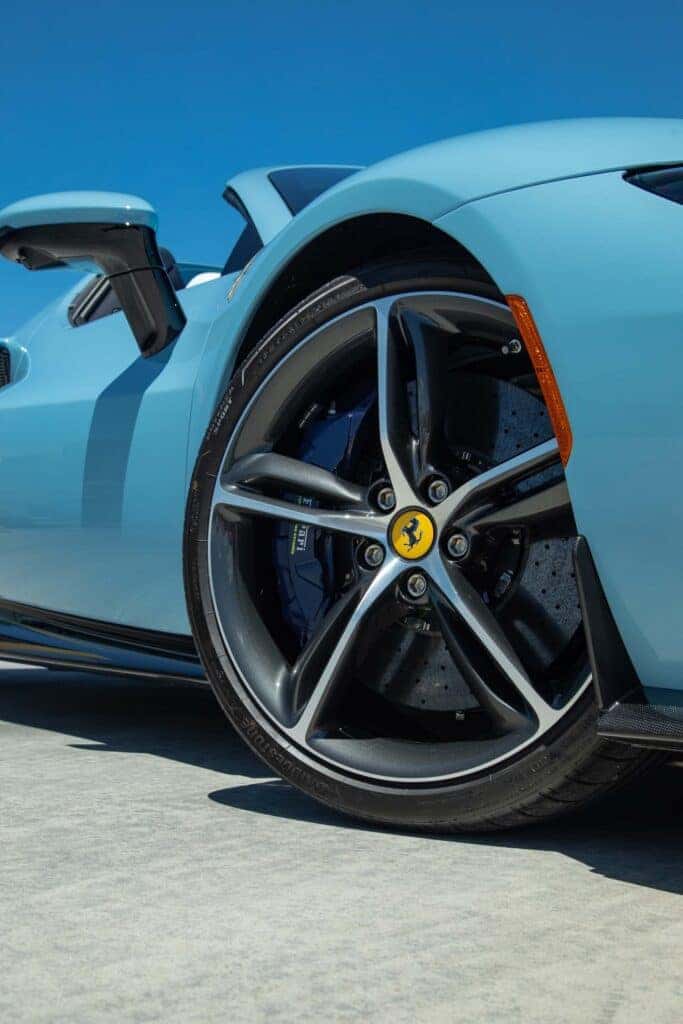
| Front Wheels | 20 × 9.0 in |
| Rear Wheels | 20 × 11.0 in |
| Front Brakes | 398 × 223 × 38 mm Carbon-Ceramic |
| Rear Brakes | 360 × 233 × 32 mm Carbon-Ceramic |
| Fuel Consumption | |
|---|---|
| Fuel Type | Unleaded Gasoline |
| Fuel Tank Capacity | 65 L (17.2 gal) |
| Combined Fuel Consumption (WLTP) | 6.7 L/100 km |
| CO₂ Emissions (WLTP) | 153 g/km |
The spider’s extreme power and performance can be boosted to the utmost by the 296 GTS Assetto Fiorano package which includes significant weight reduction and aero features.
These include special GT racing-derived adjustable Multimatic shock absorbers optimised for track use, high downforce carbon-fibre appendages on the front bumper, and more extensive use of lightweight materials such as carbon-fibre for both cabin and exterior.
The structure of some components, such as the inner door panel, had to be redesigned in some cases resulting in an overall weight saving of 8 kg. Lastly, a special 250 Le Mans-inspired livery can also be ordered exclusively with the Assetto Fiorano package.
Its design runs from the front wings and hugs the central grille and delineates its edges. This styling element continues along the bonnet, creating a hammer motif before running lengthways up to the RHT, tonneau cover and then down onto the rear spoiler